Leather or Synthetic Cricket Balls: What Changes in Play?
Compare a leather or synthetic cricket ball by its construction, feel and intended setting so you can choose a suitable option for your next session.
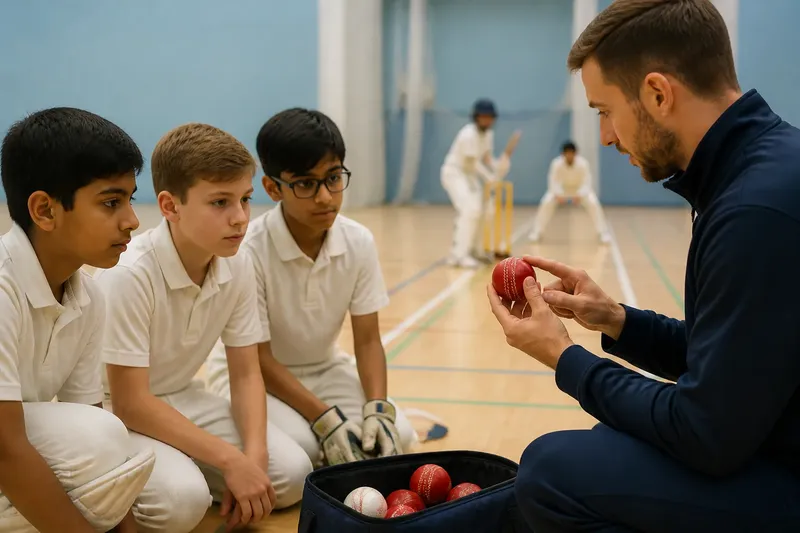
At a sports hall, a player rolls a ball across the floor before warm-up; at the ground, a teammate checks the seam of a match ball. Choosing a leather or synthetic cricket ball starts with the session, because the same label does not tell you how every ball will behave.
Construction shapes the feel of each ball
A leather cricket ball has a leather casing stitched around a firm core. The raised seam gives bowlers a distinct grip, while the casing and core together affect how the ball feels on impact.
Synthetic cricket balls use manufactured materials such as rubber or plastic, but their designs vary. Some have a soft, compressible casing; others are firm, with a moulded seam or a more substantial core. “Synthetic” names a material family, not a predictable level of bounce or hardness.
Think of a ball like a door: the outer finish is visible, but the structure beneath it affects how it responds. A label, colour or surface alone cannot tell you whether a ball suits your drill.
Match the ball to the session and surface
For a formal match, use the ball specified by the competition. For practice, check the coach’s plan, venue rules and the ball maker’s stated use. A hall, artificial wicket and grass ground can call for different choices.
- Match play: If the competition names a ball type or colour, use that ball; otherwise, ask the organiser before choosing.
- Indoor practice: If the facility permits a particular soft or indoor ball, use it; if its rules are unclear, confirm them with staff before play.
- New players: If the drill is for basic catching or striking, ask the coach whether a softer ball is appropriate; if the drill requires match-like responses, follow the coach’s plan and use suitable protection.
- Artificial wicket: If the surface guidance names a suitable ball, follow it; if not, ask the groundskeeper or club organiser rather than assuming a hard ball will behave as it does on grass.
- Bowling practice: If the aim is to rehearse a particular seam grip, choose a ball with a comparable seam; if the session is about general control, use the ball specified by the coach.
- Close fielding: If players will stand near the batter, use a ball and protective equipment suited to the drill; if the ball is too firm for the group or setting, change the ball or increase the distance under the coach’s direction.
Say a coach is planning an introductory sports-hall session. The starting inputs are a hall that allows indoor-design balls, beginners practising straight drives, and fielders standing nearby. The coach checks the venue rules, selects a ball labelled for indoor practice, moves the fielders to a suitable position and explains the drill. The expected observable result is that players practise watching and striking with a ball intended for that setting; if the ball feels too firm for the group, the coach can stop and switch to a softer permitted option.
Check the product details before choosing
Read the packaging or maker’s description rather than judging by appearance. A bright casing may still be firm, and a synthetic surface does not automatically make a ball suitable for indoor play.
- Intended setting: If the description names your venue or activity, consider the ball for that use; if it names a different one, choose a product intended for your session.
- Material and firmness: If the product information describes a feel that suits the players and drill, proceed to the other checks; if firmness is unclear, ask the supplier or coach before use.
- Seam: If the seam provides the grip your bowling drill needs, it may suit that practice; if it is smooth or moulded and the drill needs a stitched seam, choose another design.
- Surface compatibility: If the maker or venue approves the ball for the pitch, net or hall, use it there; if guidance conflicts or is missing, confirm suitability before play.
- Condition: If the casing is intact and the shape is even, keep it in consideration; if you see cracks, loose stitching or distortion, set it aside and use an undamaged ball.
- Match requirements: If the competition specifies a type or colour, follow that requirement; if you are unsure, ask the match organiser rather than substituting a practice ball.
Keep the ball usable between sessions
After play, remove loose dirt with a dry cloth. If the ball is damp, wipe it gently and let it air-dry before storage; avoid soaking leather or placing either type near direct heat.
Store balls somewhere dry, away from sharp objects that could cut a synthetic casing or damage leather stitching. Before a session, look for a loose seam, cracks or a misshapen body. If you spot damage, set the ball aside rather than trying to repair it with household glue or improvised coverings.
What do players commonly ask about these balls?
Does a leather ball always swing more?
No. Swing depends on the seam, surface condition, release and surrounding air, so the material by itself does not predict it. A leather ball’s seam and changing surface can matter, but individual balls differ.
Can a synthetic cricket ball be used outdoors?
Some synthetic balls are intended for outdoor use, while others are made for indoor practice or a particular surface. Check the maker’s description and local rules before play.
Can a leather ball suit a beginner?
It can suit a coached session when the drill, player ability and protective equipment support its use. Ask the coach which ball fits the activity rather than treating experience alone as the deciding factor.
Can one type replace the other in training?
It can for some general catching or striking drills, but the feel may change. If the practice depends on match-like seam, bounce or impact, use the ball specified for that session.
When choosing a leather or synthetic cricket ball, confirm the intended setting first, then check its seam, firmness and condition. If those details do not match the players or drill, change the ball or adjust the activity before play begins.